Averages hide responders
Patients with the same diagnosis often respond very differently to the same therapy. Population averages hide the subgroups that benefit, and the ones that do not.


EndoVia Therapeutics
We combine functional tumor-model data, molecular profiling and mechanistic modeling to explain and predict treatment response.
The challenge

Patients with the same diagnosis often respond very differently to the same therapy. Population averages hide the subgroups that benefit, and the ones that do not.
Viability alone shows that a tumor model responds, not why. Without signaling and molecular context, a response cannot be explained or transferred.
Without mechanistic insight, compounds and combinations are tested one by one, and clinical trials can fail even when a responder subgroup exists.
Our platform runs as a closed loop. Every experiment improves the model, and every model output points to the next experiment.

Laboratory ↔ Model
Characterize tumor models by functional drug response, signaling and molecular profiles.
characterize tumor models by functional drug response, signaling and molecular profiles.
connect these measurements in mechanistic models, supported by machine learning and AI.
generate testable predictions of sensitivity, resistance and combination effects.
test predictions in the lab and feed the results back into the model.
define biologically meaningful subgroups for development decisions.

cancer cell lines and patient-derived models that capture patient-like differences.
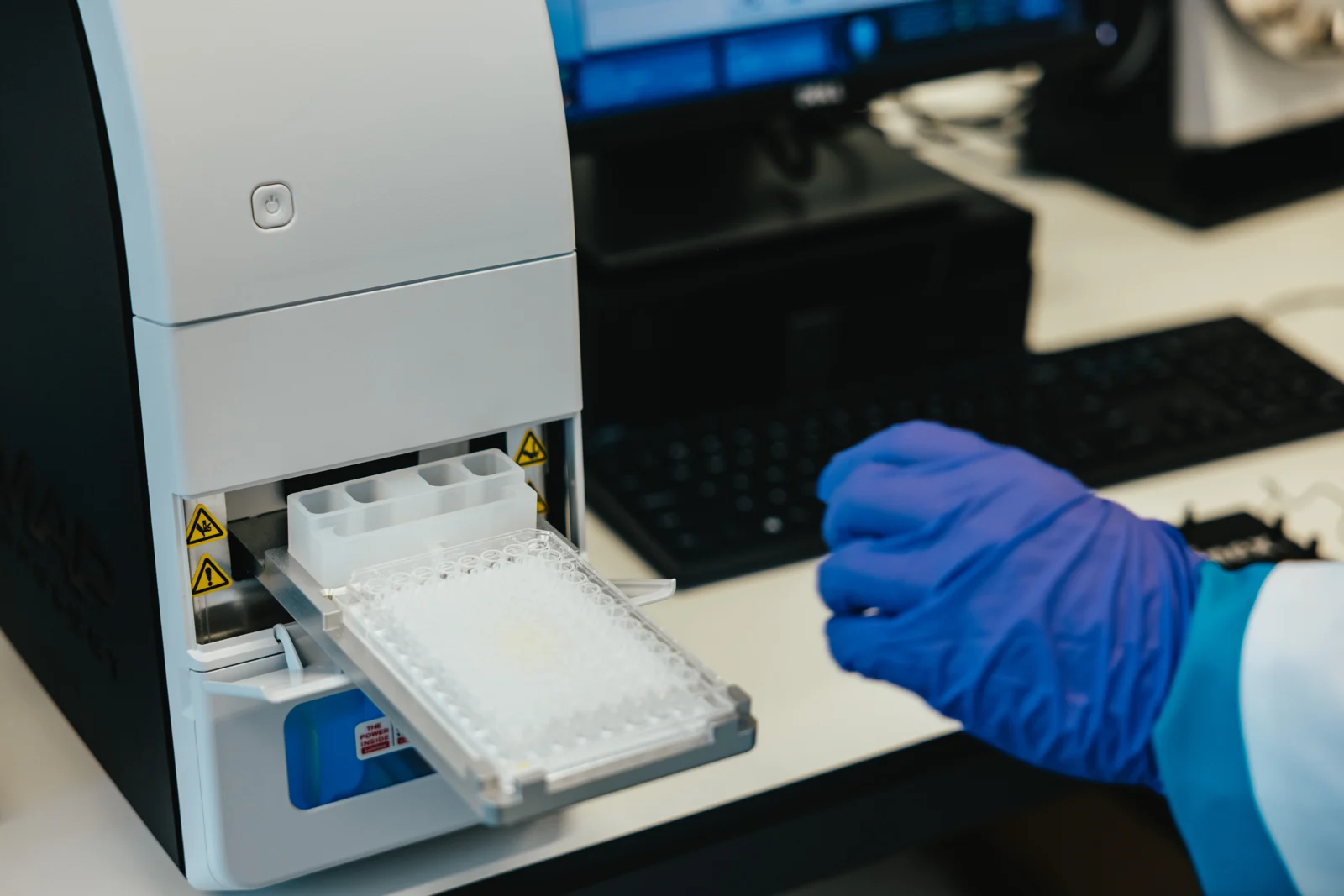
functional response, signaling and molecular profiles measured on the same models.
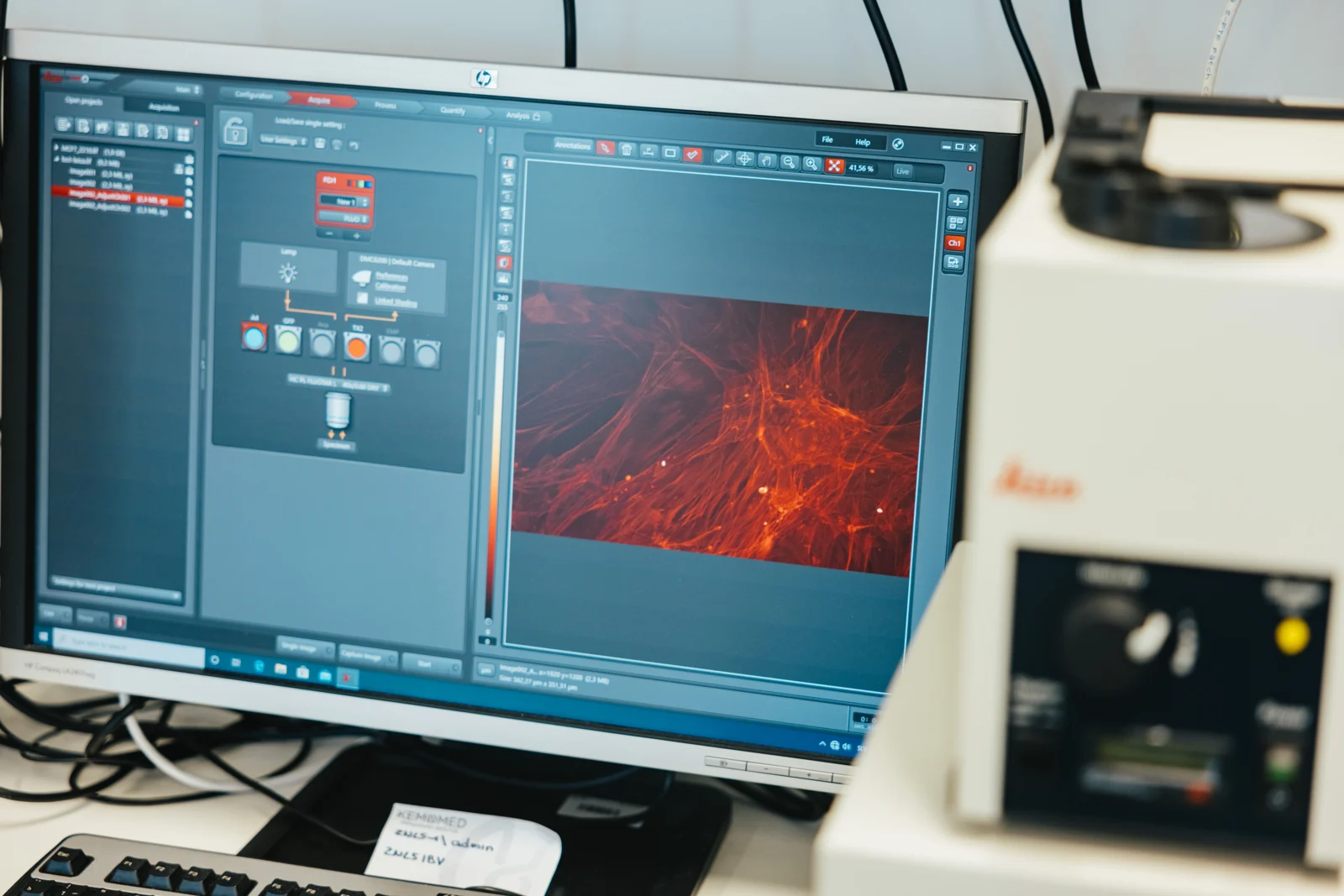
mechanistic modeling and machine learning that link drug targets to response.
which tumors respond, and why?
what distinguishes responders?
which candidate goes next?
what works together, and how?
which patients are most likely to respond, before the trial starts?
which adverse effects and interactions can we anticipate early?

Cannabinoids show broad anticancer activity in the lab, yet clinical results remain inconsistent. That makes them the ideal first test for our approach. Through PRECISION-ECS, funded by the European Innovation Council, we are building the evidence in melanoma.
See our programs →









We help drug developers understand which tumors respond to a treatment and why, by combining laboratory testing, molecular profiling and predictive modeling.
No. Cannabinoids are our first application. The approach works for any compound whose targets can be mapped to signaling pathways.
Most collaborations start with a focused pilot on one defined question. Scope and timing are agreed per project.
Tell us about your compound and the decision ahead. A short, non-confidential description is enough to start.
Discuss a project